Choosing the right cake transport box is the difference between a delivery that keeps you up at night and one you don't think twice about. Here's a quick guide to the CakeSafe lineup, so you know exactly which one fits your business.
How to Deliver a Tiered Cake Without It Falling Apart
If you've ever driven a wedding cake across town with your heart in your throat, flinching at every pothole and taking turns like you're carrying a sleeping baby, you're in good company.
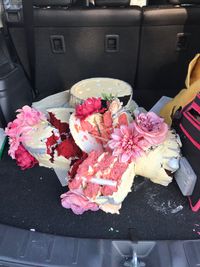
We've talked to thousands of bakers over the years, and almost every one of them has a delivery story. The tier that slid on a sharp turn. The buttercream that started sweating in a hot car. The cake that made it all the way to the venue, only to crack on the walk from the parking lot.
Here's the good news: most delivery disasters are preventable. It comes down to a few habits you build into every order, from the moment you stack the cake to the moment you set it on the table.
Step 1: Build a cake that's ready to travel
A smooth delivery starts long before you pick up your keys. The way you build the cake decides how well it handles the road.
Support every tier. Each tier needs its own cake board and internal supports (dowels or straws) cut to the exact height of the tier below. If the supports are even a little short, the weight sinks onto the cake itself, and that's when bulges and cracks show up.
Pro Tip: Place one less dowel than the number of inches of the tier it will be supporting. Example - If you're placing an 8 inch tier on top of a 10 inch tier, you'll put 9 dowels into the 10 inch tier.
Anchor the whole stack. Internal supports hold the weight, but they don't stop tiers from sliding sideways. A center dowel that runs through every tier and into the base board keeps everything locked together, so a sudden stop doesn't turn your cake into a leaning tower. Or you can use a CakeSafe Cake Transporter. They anchor your cake with a patented design utilizing a food grade stainless steel center rod.
Chill it well. A cold cake is a firm cake. Give fully decorated cakes plenty of time in the fridge before delivery so the buttercream or ganache sets up. Firm frosting holds its shape and is much more forgiving if something bumps it.
Decide: stack at home or on site? For very tall or heavy cakes, a lot of bakers travel with the tiers separate and stack at the venue. It's more work at setup, but it takes away most of the risk on the drive. If you do stack at home, a secure transport box makes a big difference (more on that below).
Step 2: Get your car ready before the cake goes in
Your car is part of your delivery equipment, so treat it that way.
Cool it down first. Turn the AC on high at least 10 minutes before you load up, especially in hot weather. A car that's been sitting in the sun can be far hotter inside than it is outside, and buttercream doesn't stand a chance.
Find the flattest spot. Car seats are sloped, and that tilt adds up over a long drive. The floor of an SUV cargo area or a minivan is usually your best bet. If you drive a sedan, the passenger-side floor often works better than the seat.
Stop the slide. Lay down a non-slip mat (the rubbery shelf liner from the dollar store works great) so the box or board stays put. Then use towels or foam to block it in so it can't shift.
Keep it out of the sun. If you have car window shades, utilize them. Or place a sheet or blanket over the cake box to keep it out of the sun and more insulated.
Did You Know? UV rays from the sun can change the color of buttercream.
Step 3: Drive like you're carrying something precious (because you are)
This is the part everyone worries about, but a few small changes make it much calmer.
Plan your route ahead of time. Pick roads you know, avoid construction where you can, and skip the shortcut with all the speed bumps.
Leave early. Rushing leads to quick stops and sharp turns. Give yourself a time cushion so you can drive slow and stay relaxed.
Brake gently and take turns wide. Start slowing down earlier than you normally would, and ease into every corner.
Bring a helper if you can. A second person can keep an eye on the cake, navigate and help carry at the other end.
Go straight there. Now isn't the time to pick up coffee or run an errand. Every stop is another chance for something to go wrong.
Step 4: Pack a cake emergency kit
Even with perfect prep, little things happen. A small kit in your car means a scuffed corner is a two-minute fix instead of a panic. Here's what we'd put in it:
-An extra bag of the cake's frosting
-Offset spatula and a small bench scraper
-Piping tips and a couple of empty piping bags
-Extra fondant or decorations that match the design
-Spare flowers or greenery if the cake uses them
-Paper towels, wet wipes and a few clean towels
-Scissors, toothpicks, and bamboo skewers
Most of the time you won't need to use your kit. But the one time you do, you'll be so glad it's there.
Step 5: Set up at the venue with confidence
You made it. Take a breath. The last 50 feet matter just as much as the drive.
Scope it out before you carry anything. Walk in empty-handed first. Find the cake table, check that it's sturdy, the legs are locked, and its level. Look for steps, doors or tight corners on the way in.
Use a cart if you can. A flat, rolling cart is easier on your back and much steadier than carrying a heavy cake in your arms. We like this elevated cart, or this lower to the ground cart.
Do your touch-ups on the table. Once the cake is in place, smooth any scrapes, add the topper and fresh flowers, and step back to look at it from where the guests will see it.
Snap a few photos before you leave. They're great for your portfolio. They also show the cake arrived in perfect shape, which is handy if a question ever comes up later.
Where CakeSafe comes in
We started making CakeSafe cake transporters because we knew the cake delivery anxiety all too well. We wanted bakers to be able to stack a cake at home, load it up and actually enjoy the drive.
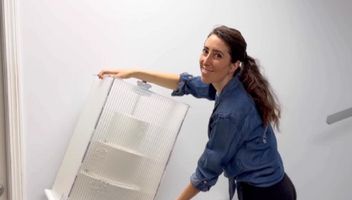
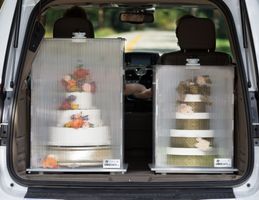
A CakeSafe box surrounds your cake with insulated polycarbonate walls and anchors it with a center dowel, so the whole stack stays put through stops, turns and bumpy parking lots. You can see the cake the entire time, and at the venue you can slide it out with very little handling.
The tips above work no matter what you deliver in. But if delivery day is the part of the job that keeps you up at night, take a look at how CakeSafe boxes works and see if it's a fit for your kitchen.
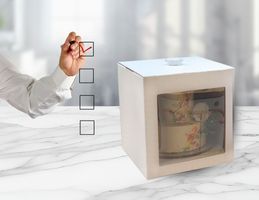
Grab our free delivery checklist
We turned this whole guide into a one-page checklist you can print and keep by the door, so nothing gets forgotten on a busy morning. Download the cake delivery checklist and we'll send it straight to your inbox.
More Posts


Let me paint you a picture. You've spent four days on a five-tier wedding cake. The sugar flowers are hand-painted. The ganache drip is *perfect*. You load it into your car, take a turn a little too fast, and — you already know where this is going.
It's a story I've heard (and lived) more times than I care to count. And honestly? It doesn't have to be that way. Smart bakers - the ones doing this at scale, building real businesses, and sleeping soundly the night before a big delivery - treat cake transport like it's part of the craft. Because it is.
So let's talk about what they do differently.
They Plan the Transport Before They Plan the Design
This one takes a mindset shift, but it's a game-changer. Before the first tier is baked, experienced bakers are already thinking: How big will this be? How far does it travel? What's the delivery environment like? Cake transport isn't an afterthought, it's baked into the process from the start (pun very much intended). That means choosing dowels and supports that can handle the journey, sizing tiers with transport in mind, and knowing exactly what box or carrier you're using before you commit to a design.
They Invest in the Right Equipment
Here's what separates a stressful delivery from a confident one: the right gear. Smart bakers don't throw a sheet cake in a grocery store box and hope for the best. They use purpose-built cake carriers and transport systems designed to keep cakes stable, protected, and exactly where you put them.
The CakeSafe box was literally designed for travel. It holds assembled tiered cakes securely during transport, so you're not driving with one eye on the rearview mirror for the entire trip.