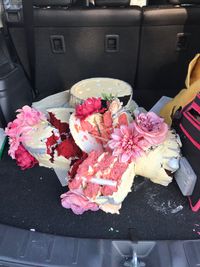
If you've ever typed 'how much should I charge for cake delivery' into a search bar at midnight, you're in good company. Pricing delivery is one of those things nobody really teaches you when you're starting out. You figure out your recipe costs, you set a labor rate that represents the value of your time and energy, and then someone asks 'do you deliver?' and suddenly you're doing mental math in real time while trying to sound professional on the phone.
It doesn't have to be that way.
Whether you decide to roll the time and expense of deliveries into the price of your cakes, or have delivery as a separate charge, you need to figure out what is a fair price for delivery-for your customer and for you.
Let's break down exactly how to price cake delivery, and just as importantly, how to talk about it with clients so it never feels awkward.
Why So Many Bakers Underprice (or Don't Charge at All) for Delivery
Honestly? Because it feels easier in the moment to just say 'I'll throw delivery in' than to justify the total fee. But here's the truth: delivery is not free. It never was.
When you deliver a cake, you're spending:
-- Your time - loading, driving, setting up, return trip
-- Fuel and vehicle wear
-- Your mental energy managing a high-stakes transport
-- Money on the right equipment to keep that cake safe
That last one is real. Professional cake delivery requires professional tools — proper carriers, non-slip mats, support systems for tiered cakes. That equipment costs money, and it exists to protect your work (and your reputation).
When you don't charge for delivery, you're absorbing all of that. Over time, that adds up to a lot of money quietly walking out the door. Delivery is a professional service. Price it like one.
How to Calculate Your Cake Delivery Fee
There's no single universal number here, but there is a formula. Here's how to think about it:
1. Start With Time
Calculate the full time block: loading the car, driving there, setup at the venue, and driving back. Be honest — don't just count drive time. A delivery that's 20 minutes away is probably a 75-minute commitment by the time it's all said and done.
Multiply that by your hourly rate. If you charge $40/hour for your labor and the delivery takes 1.25 hours, that's $50 before you've even touched fuel costs.
2. Add Mileage
A simple approach: use the IRS standard mileage rate (currently $0.73/mile in 2026) as your baseline, then round up slightly to account for wear and the stress of driving with a fragile cargo. Charging $0.75–$1.00 per mile is completely reasonable for cake delivery.
3. Factor in Complexity
Not all deliveries are equal. A single-tier cake to a nearby venue is very different from a five-tier wedding cake going 45 minutes away that needs on-site assembly. Build tiers into your pricing:
-Local / single-tier: flat fee ($15–$25)
-Mid-range / multi-tier: $35–$65 depending on distance
-Wedding / large event / long distance: $75–$150+, or quote individually
4. Don't Forget Setup Time
If you're assembling tiers on-site, placing the cake, adding finishing touches, or waiting for a venue coordinator to be ready — that's billable time. Charge for it.
A good rule of thumb: if delivery feels like a lot of work, it probably is. Price accordingly.
What to Say to Clients (Without Feeling Awkward About It)
This is where a lot of bakers freeze up. The cake pricing feels justified, but the delivery fee? That's where the second-guessing kicks in.
Here's the mindset shift that helps: you're not charging extra, you're quoting the full service. Delivery is part of what you do, and it has a cost. Full stop. This is why you may want to just add the cost of delivery into the price of the cake. It’s not optional after all, the cake does need to get to the venue… somehow, right? And it’s definitely safer if you or someone who works for you does delivery!
Some language that works well:
When They Ask: 'Do You Deliver?'
"Yes! Delivery is available. For your location, that would be $[X]. That covers transport, setup at the venue, and making sure everything looks perfect when we get there." If you’re including delivery in the cost of the cake you would then say, “Yes! We delivery your cake and set it up at the venue. This is included in the cost of your cake.” The benefit of doing it this way (all inclusive) is you don’t have to deal with add-on costs. It’s one price.
Notice: you're not apologizing, explaining, or asking permission. You're stating it confidently as part of the service.
When They Push Back on the Fee
"I completely understand. I want to make sure you know what's included. Delivery isn't just the drive, I’m responsible for getting your cake there safely, setting it up, and making sure it looks exactly the way it did when it left my kitchen. The fee covers my time, fuel, and the equipment I use to make that happen reliably."
Most clients, when they understand what goes into it, stop pushing back. The ones who don't? That's important information about whether this is the right client for you.
When They Ask 'Can I Just Pick It Up Instead?'
“Absolutely, pickup is always an option. Just keep in mind that once it leaves my hands, the transport is on you, so I'll go over everything you need to know to get it there safely."
This is a totally valid option, and honestly, it's another reason to have a handoff checklist ready. (We've got one on the blog if you need it.)
Think about stocking cardboard CakeSafe-LITEs to hand tiered cakes to clients and have some peace of mind.
Build It Into Your Contract
Whatever you decide to charge, get it in writing. Your contract should clearly spell out:
--Your delivery fee and exactly what it covers
--Your service area and any distance surcharges
--What happens if the delivery location changes last minute
--Your liability once the cake leaves your hands (for pickups)
This protects you and sets clear expectations for your client. No surprises on either side.